virtualDavis

ˈvər-chə-wəlˈdā-vəs Serial storyteller, poetry pusher, digital doodler, flâneur.
Twitter
@virtualDavis

Jeff Gomez on the Power of Transmedia Storytelling

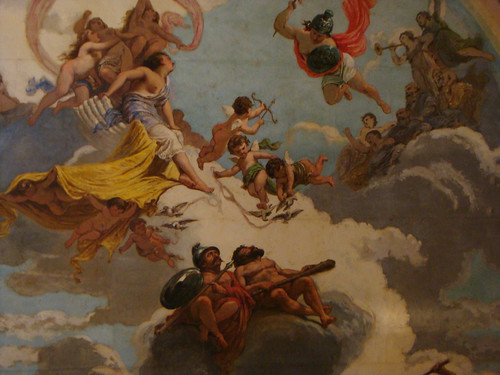
Ceilings In Cartuja

Transmedia storytelling, often referred to as crossmedia or multiplatform storytelling takes the elements of a character’s narrative and applies them uniquely to each medium while extending the story… Under the traditional model, when a big movie comes out, for example, we are offered the novelization, the adaptation in comics, and the videogame version for our Xboxes. It’s the same story over and over again, so the property is essentially milked until it’s dead. The transmedia approach to this kind of narrative would give us different pieces of the narrative on different media platforms, so that we can see the movie and then explore different aspects of the characters and the world in other media. Taken as a whole, it’s a richer, deeper experience that gives us more of what we really want. But most of all, transmedia narrative by definition has a number of what we call “invitational” components, where audience members are welcomed to participate by commenting on the narrative, by playing established or original characters, or even by contributing creatively to the world and the storyline… We are watching a generation rise to power that is plugged in and expects to be heard. They are learning to use these amazing tools and are becoming enormously savvy. They interface with gadgetry and any number of screens intuitively—but right now, most of the entertainment and brand messaging does not do that! The principles of transmedia storytelling address this, which makes transmedia narrative the most powerful in existence today. (SmartPlanet)

Enhanced by Zemanta

Welcome to Heathrow Airport

[youtube=http://www.youtube.com/watch?v=1TYJ2ScPzc4&w=335&h=279]

“Life’s for sharing” (T-Mobile advertisement)

Powerful, poignant and totally innovative storytelling! And a bit of a tear-jerker (of the happy variety) too… Long live the flashmob! Echoes of Improv Everywhere, don’t you think? Tell me you didn’t find yourself longing for this emotional welcome the next time you land at an airport?!?! Kudos to T-Mobile for super innovative storytelling.

Aside from the emotionally charged experience and story, the underlying idea that life is for sharing is compelling, timely and powerful. We live in the digital age when it is easier than ever before to share an event like this “spontaneous” welcome home concert in Heathrow airport. Indeed the video cuts repeatedly to travelers recording the event on their mobiles. Photos, videos, phone calls… this is the age of immediate, virtually universal sharing. And the powerful message underlying this advertisement for T-Mobile is that connecting with others to share beauty, to share happiness is magical and humanizing. It’s a universal desire. Too often we all fall into ruts of isolation passing through each others’ lives like ghosts, like passengers in an airport. But moments when our isolated, insulated bubbles pop and we are connected, even temporarily to others is what makes life worth living. We are inherently social creatures, but we’ve been socialized to wear blinders, to limit connection with those around us. Storytelling — and, in this case, T-Mobiles communication tools and network — bridge the divide between us. Okay, time to lay off! I’ve become gushy and repetitive. (The sign of an effective advertisement!)

The Day the Gingko Leaves Fell

The Day the Gingko Leaves Fell - 3

The Day the Gingko Leaves Fell

Gingko Biloba carpet with Lake Champlain backdrop!

Each autumn the leaves of an enormous old Ginkgo Biloba tree in our yard retain their leaves until the frigid end. They’re among the last leaves to fall, and they remain green until just a day or two before cascading down. And when they decide it’s time to let go, they all do it at once.

An enormous canopy of a tree reaching about 100 feet tall covered in thick foliage one day and naked the next. It’s dramatic. And slightly surreal.

This morning, Wednesday, November 3, 2010 was the magic moment. We experienced a deep frost last night in Essex, NY, and I’m pretty certain that it’s the sudden temperature change which triggers the the leaves to fall.

The photos I took this morning capture the scene before anyone has driven up the driveway and marred the perfect carpet of almost succulent Gingko leaves. Perfect timing too because the wonderful father-son team who mow our lawns and remove our leaves come today. This is fortunate because the Gingko leaves fall so thickly and they are still so lush and heavy (unlike the crisp maple, ash and oak leaves which blow around in the breeze) that they smother the lawn. Prompt removal to the compost serves the lawn AND next spring’s gardens!

More Gingko Leaves:

The Word Made Flesh

The Word Made Flesh – book trailer from Tattoolit on Vimeo.

The Word Made Flesh: Literary Tattoos from Bookworms Worldwide is a full-color photo-and-text anthology edited by Eva Talmadge and Justin Taylor, forthcoming October 12, 2010 from Harper Perennial.

The Word Made Flesh: Literary Tattoos from Bookworms Worldwide is a guide to the emerging subculture of literary tattoos — a collection of 100 full-color photographs of human skin indelibly adorned with quotations and images from Pynchon to Dickinson to Shakespeare to Plath. Packed with beloved lines of verse, literary portraits, and illustrations — and statements from the bearers on their tattoos’ history and the personal significance of the chosen literary work — The Word Made Flesh is part photo collection, part literary anthology written on skin.

Special features include a reprint of a short story by Donald Barthelme (along with the tattoo it inspired on the author’s daughter), an interview with Brian Evenson about seeing his own work tattooed on someone else, Shelley Jackson’s SKIN Project and Rick Moody’s Shelley Jackson tattoo, Jonathan Lethem’s homage to Philip K. Dick, Tao Lin’s Tao Lin tattoo, and much much more.

I’m not much of a tattoo fan, but this trailer (and the concept for the book) is totally intriguing. If it’s piqued your interest too, stop by tattoolit.comto see more tattoo photos, read about the book, and find out how to attend the launch party at the powerHouse Arena in New York on October 20th. You can also follow this dynamic duo on twitter (@TattooLit) and Facebook. What are you waiting for, a message from God?!?!

Update: Feeling curious-er and curious-er? Check out these additional The Word Made Flesh sightings:

Each photograph appears with a statement from its owner, describing the tattoo’s history and significance. Commonalities emerge: inspiration, whimsy, a certain gloom… The literary tattoo… still bears some connotation of punishment. But… it is also a way of using literature as a public symbol of character. (New Yorker)

Tattoo

Jenny Hendrix reviews The Word Made Flesh: Literary Tattoos from Bookworms Worldwide, edited by Justin Taylor and Eva Talmadge:

The literary tattoo is at least as old as Hester Prynne’s scarlet “A,” and like any tattoo still bears some connotation of punishment. But as with Hester’s, it is also a way of using literature as a public symbol of character. It also invites serious considerations of font and typesetting, even to the point of recreating a specific edition of a book. …

As with any form of self-publishing, the literary tattoo takes pluck. [Bold mine!] Montaigne wrote, in a phrase I imagine no one has tattooed themselves with, “Only fools have made up their minds and are certain.” But it seems to me to be a wonderful group of fools that, like the memorizers in “Fahrenheit 451,” carry the written word with them everywhere.

via andrewsullivan.theatlantic.com

Halloween Memento Mori

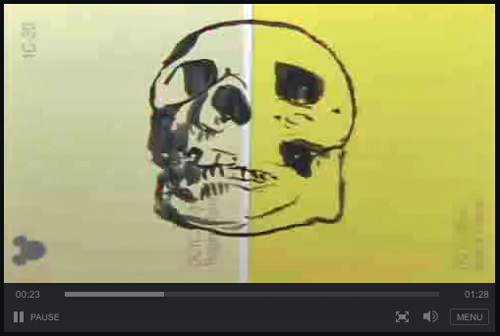
Jeff Scher's "Memento Mickey"Jeff Scher’s Memento Mickey (video via NYTimes.com)

“Memento Mickey” is a Halloween memento mori. Latin for “remember you will die,” it is also a genre of art that uses death to remind the viewer that life is indeed fleeting. This is not necessarily morbid or macabre, but life-affirming in that it also reminds us that we’re not dead yet. There’s still time. So make it count. (NYTimes.com)

This mesmorizing video, painting and soundtrack deliver an invitation to reflect on our mortality about as subtle as getting hit by a commuter train. Repeatedly. In slow motion. And I love it! Go figure…

Jeff Scher is a painter and experimental filmmaker with a philosophical bent and a gift for blending media. Enjoy the video.

Movellas: Mobile Novels

[youtube=http://www.youtube.com/watch?v=PB-tAImpeG8&w=335&h=279]
Check out the Movellas backstory! (via youtube.com)

Have you heard about Movellas? New to me, a curiosity fished out of my Twitter stream… But intriguing. Attractive video. Simple, straightforward site. Unfortunately this Danish startup seems to attracting primarily (almost exclusively?) non-English language storytellers. So, I’m not able to vouch for the quality of the “mobile novel” ostensibly born of at Movellas. I searched for a language filter to sort out novels I could read. Doesn’t seem possible at this time. I’ll check back…

Enhanced by Zemanta

New York Times Has More Twitter Followers Than Print Subscribers

new york times sulzbergerThe New York Times has a great online brand and business… [but the print newspaper business] is imploding and dragging down the rest of the company.

Sounds like a familiar problem these days, right? All too familiar. But here’s the interesting twist. The New York Times is a social media rockstar! This morning, for example, the New York Times Twitter acount (@nytimes) has almost 2.7 million followers! You read that right. That’s the big leagues. Idon’t play in the big leagues. The farm leagues, perhaps! In relative terms, @nytimes has approximately 831 times more followers than I do… And I’m one of those 2.7 million followers because I value the real-time information soundbites, article leads, etc.

To put this into perspective, that’s more than twice as large as the New York Times’ print circulation, which is slightly under a million copies for the daily copy of the paper.

And, let’s face it. The disparity between these two circulation figures will only grow as time goes on. So what’s the point? I tend to agree with [most of] the following:

we think those two numbers are such a symbol of the NYT’s current, bittersweet situation:

  • Print is dying;
  • The NYT is going to have to restructure and reorient its business in a major way;
  • But the NYT is actually hugely successful online and has all the assets it needs to build a huge, lasting online brand instead of letting itself be disrupted by nimbler outfits like the Huffington Post.

(Business Insider)

I’m not ready to foretell the death of print. Not totally. Not yet. Books, in particular, will keep print alive, but (as I’ve said before) print books will become an increasingly niche subset of publishing. However, newspapers alre already stepping away from print. The businees model simply isn’t sustainable. I read virtually all of my news on the web at this point. Living oversees made me an early adopter. Universal access. Instantaneous access. And nothing to throw away. Nothing to smudge all over my fingers. Easy to search. In my opinion, digital journalism has already discplaced print, and we’ll continue to see print newspapers shuttered in the days ahead. Twitter won’t replace nytimes.com but the website will replace the print paper. Etc.

Enhanced by Zemanta

Self-Publish with Borders and Barnes & Noble


The publishing industry’s changing landscape (engadget.com)

Not to be outdone by Amazon, Borders and Barnes & Noble have entered the publishing racket.

Earlier this month Barnes & Noble launched a self-publishing platform called PubIt! that will compete directly with Amazon CreateSpace and indirectly with Apple’s iBookstore.

In an attempt to do for indie writers what InstantAction has done for indie game developers,… the world’s largest bookseller is hoping to expand its importance in the digital realm by giving wannabe authors the ability to upload and sell their material through B&N’s website and eBookstore… the real kicker here is this won’t be limited to the Nook; pretty much any e-reader, tablet or PC will be able to tap in and make purchases, so the potential audience is quite large. (engadget)

Of course, Kindle too ensured that their electronic books are universally accessible by developing apps that work across devices and platforms, but B&N’s open publishing model is smart. Sure, Nook has been a bit of a sleeper next to the Kindle, and B&N doesn’t want to limit the potential market (or perception) by being number two in the reader market. Or number three when the iPad is thrown into the mix? Whatever the logic guiding this policy, it’s welcome and overdue. Limiting media to Kindle or iPad, though lucrative in the short run, is a major turnoff for the consumer. It’s like saying, “Here, buy our glossy print book, but you can only read it at home. Not at work. Not on vacation. Not on the bus. At home!” Okay, so it’s not exactly like that, but it is perceived as unnecessarily restrictive. And if B&N can manage to open up the electronic publishing industry, I’m confident that consumers (and authors) will respond.

Okay, enough prattling and jab-jab-jabberwocky… What’s the bottom line?

[PubIt!] is essentially designed to give independent writers a venue for hawking their masterpieces, with PubIt! converting files to ePUB for use on a wide range of e-readers… Published titles will be available for sale within 24 to 72 hours after upload on the B&N eBookstore, and the company’s pretty proud of its “no hidden fees” policy… PubIt! ebooks will also be lendable for a fortnight… (engadget)

Inevitable, but no less exciting, Borders has announced that they want a piece of the indie action too. Their self-publishing platform, Borders Get Published, appears to be a joint venture with BookBrewer (the blog-to-ebook folks) and is scheduled to launch on Monday.

Using the service, authors can publish and sell eBooks through the Borders eBook store, as well as other partner eBook retailers… Authors can sell works of any length and chose [sic] the price within a price range set by the retailer. Authors can add content by typing in the platform, by copying and pasting it into an online form, or content can be fed from an existing website or blog. The content will be saved as an ePub file.

There are two tiers of pricing for those looking to get published –$89.99 and $199.99. Under the basic package, BookBrewer will assign the book an ISBN and make it available to major eBook stores at a price set by the writer. Royalties will be based on sales and will vary with each retailer. The higher priced package comes with a full version of the ePub file, that authors can share with friends, family and press and submit to other eBook stores. (mediabistro.com)

Exciting times. Unless you’re in the traditional publishing industry, I would think. It’s a little surreal that the new publishing map is being hashed up by retail/distribution power players while traditional publishers sit idly by worrying, griping, soap boxing and nay saying. I have to believe that earth shattering innovations are in the offing from the Big Six, right? I mean, these are smart, powerful companies. They won’t just sit back and watch as the new guys gobble up their lunch, dinner and cocktails! Or will they?

While print book sales continue to decline, e-book sales are up 192.9% this year to date, according to figures gathered from 14 publishers by the Association of American Publishers (AAP). E-books now make up 9% of all trade sales in the U.S.; last year, they made up a mere 3.3%. E-book sales have reined in $263 million thus far in 2010, and $39 million in August alone — a 172.4% increase over last year’s sales numbers. Meanwhile, sales of paperback and hardcover books continue to decline across the board… ( Mashable )

The publishing industry is shifting so rapidly that it’s still difficult to anticipate what tomorrow will look like. I suspect that a decade from now we’ll have an entirely new understanding of media creation, publication, distribution and curatorship. And I hope that it will be a more open, less top-down model. Just as there’s reason to worry that a shift will not necessarily amount to progress, there’s ample reason for optimism. I’m sticking with Pollyanna!

Related:

Enhanced by Zemanta

The Art of Listening

Most people are not proficient at the art of listening. It requires practice and dedication.

"Will the rain stop? Soon? Ever?" Yes, I assure Griffin, but for now you pee in the rain. Sorry...

David Weedmark, author of The Tanglewood Murders recently opined on the global listening deficit. And like so much that germinates from his clever mind, his observation that the population at large isn’t very skilled at listening and his “5 Keys to the Art of Listening” are worth reading, re-reading and then passing along to the folks you’d like to listen.

It reminded me of something I used to tell my students. The first step in storytelling is listening. And the second and the third.

To tell stories, you must listen to the world around you. Not just the stories written, told, illustrated by others. There’s a deeper listening that precedes good storytelling, an intentional receptivity to the world around us.

That cracked manhole cover has a story. That twisted walnut tree has a story. That distant dog bark carried on the wind, and the smell of burning leaves, and the scar across you left pinky knuckle. All have stories.

Can you hear them? If you listen, really listen, you’ll begin to hear the stories underneath. And then you can begin to pick and choose the ones you like, the ones you understand, the ones your audience most desire and need.

Weedmark’s guidelines are helpful:

  1. Listen actively. Look in the person’s eyes, watch their mouth. Lean forward.
  2. Don’t think about talking. Think about what the other person is saying.
  3. Ask questions. When the other person has finished… [speaking] ask a question…
  4. Don’t fake it. [Your] time is just too valuable.
  5. Ask better questions. Take them deeper into their own thoughts and feelings by asking them why they did what they did and how they got to where they are.

(via David Weedmark)

Do you already practice the art of listening? I’ve learned that people appreciate good listeners. They open up, share more, pour more passion, more life into their communication. And you’re the winner. Better listeners receive better stories. Weedmark wraps up his post by reminding us that there’s always room to improve the art of listening: “Let people know you want to listen. Let them know you care.” And you’ll be the richer for it!

Stephen Fry Loves Language

[youtube=http://www.youtube.com/watch?v=J7E-aoXLZGY&w=335&h=201]

Stephen Fry kinetic typography animation (youtube.com)

Although the visual effect is clever (and ultimately compelling) it tires the eyes and pushes the concept too far. That said, Stephen Fry’s reflection on the increasingly overlooked wonders of language (as well as the tendency for critics to harp on language fouls and blunders rather than celebrating the extraordinary richness of words) is delightful. A welcome tune for many wordsmiths, and a reminder that we should emphasize the power and beauty of language rather than beating up the language manglers. I remember my mother telling me as a boy, “You’ll get more flies with honey.” Right?

Enhanced by Zemanta