virtualDavis

ˈvər-chə-wəlˈdā-vəs Serial storyteller, poetry pusher, digital doodler, flâneur.
Twitter
@virtualDavis

The Everett Ruess DNA Miscalculation


Photograph of Utah’s Comb Ridge by Dawn Kish
(National Geographic Adventure)

The discovery of explorer Everett Ruess’s skeletal remains, as detailed in the April/May 2009 issue of Adventure (“Finding Everett Ruess“), appeared to be a slam dunk. A team of forensic scientists laid out an impressive case, backed by a DNA test that linked bones found in the Utah desert to the long-lost explorer, an icon of the American Southwest. Well, DNA results are only as good as the process that produces them, and in this case, a peculiar set of blunders managed to complicate, rather than solve, a 75-year-old mystery. (David Roberts National Geographic Adventure)

For the romantics out there who’ve been following this story through the years, it’s easy to agree with Everett’s nephew, Brian Ruess: “Everett,” Brian says, “just doesn’t want to be found.” Not when he was alive; not now.

Alain de Botton: A Kinder, Gentler Philosophy of Success

Alain de Botton examines our ideas of success and failure — and questions the assumptions underlying these two judgments. Is success always earned? Is failure? He makes an eloquent, witty case to move beyond snobbery to find true pleasure in our work. [ted.com]

It’s a Great Time to Be an Author

via blog.nathanbransford.com

The publishing world is awash in doomsday chatter, agonizing over the rapidly evolving packaging, distribution, retail and copyright landscape. There’s no question; the publishing world has changed, is changing and will continue to change. Bitch if you want, but we can’t go back!

Frankly, I’m with literary agent Nathan Bransford who says, “You can either be scared of the future or excited. I’m pretty excited.” His blog posting last Thursday has been swamped with comments, mostly optimistic comment from folks who are tired of the horror stories.

Bransford trumpets what’s being referred to more and more as thedemocratization of the publishing world. In the old paradigm, the filtration process (publishers, agents, retailers, etc.) dramatically limited the content that made it from creators to consumers. Probably in most cases this was a “good” thing, but it’s not hard to find fault with the top-down publishing model.

In the e-book era, everyone will have a shot. And I refuse to believe that’s a bad thing… Yes, there’s going to be a lot of dreck out there that we’ll have to find a way to sort through. Yes, publishers will be challenged by lower price points and will have to change and adapt to the digital era. Yes, my job will probably change some too… And yes, this new era will require more of authors… It will require an entrepreneurial spirit and a whole lot of virtual elbow grease… But what better time to be an author?! All any writer wants is the chance to reach an audience and see what happens from there. Just a chance. And it’s looking like everyone’s going to get that chance.” (via blog.nathanbransford.com)

Novice Authors Must Promote Themselves, Since Publishers Won’t

Poor Kelly Corrigan, first-time author, didn’t get invited to this weekend’s National Book Festival on the Mall to plug her 2008 memoir, “The Middle Place.” She won’t be rubbing shoulders with heavyweight authors such as Sue Monk Kidd, John Grisham or Pulitzer winner Junot Diaz. No major newspaper bothered to review the California mom’s tale about cancer and family and recovery when it was released. Her publisher didn’t send her on tour. All the old-school staples of book promotion — the book festival, the tour, the glowing newspaper review — Corrigan got none of them.

What was a newbie author to do?

She cobbled together a trailer for her book on her home computer, using iMovie software, downloading a free tune off the Web for background music, and stuck it on her Web site. Her agent helped get her on one network television morning show. About 20 friends hosted book parties, which she hit on a self-funded three-week blitz, selling books out of the trunk of her car. A guy shot video of her reading an essay at one of these parties, and she posted it on YouTube when the paperback came out.

A year later, the book has sold about 80,000 copies in hardcover and another 260,000 in paperback, according to Nielsen BookScan data. It sat on the New York Times bestseller list for 20 weeks, peaking at No. 2. That homemade trailer has been viewed more than 100,000 times. The video of her reading has drawn 4.5 million hits. She’s in Washington on Thursday, speaking at the Congressional Families Cancer Prevention Award luncheon. Then she will plow into more than a dozen paid speaking gigs across the country in the next six weeks.

(Excerpted from Neely Tucker’s article in The Washington Post on Thursday, September 24, 2009)

Quieting the Lizard Brain

“How can I explain the never-ending irrationality of human behavior? We say we want one thing, then we do another. We say we want to be successful but we sabotage the job interview… The amygdala isn’t going away. Your lizard brain is here to stay, and your job is to figure out how to quiet it and ignore it.” ~ Seth Godin

In Memoriam J.D. Salinger

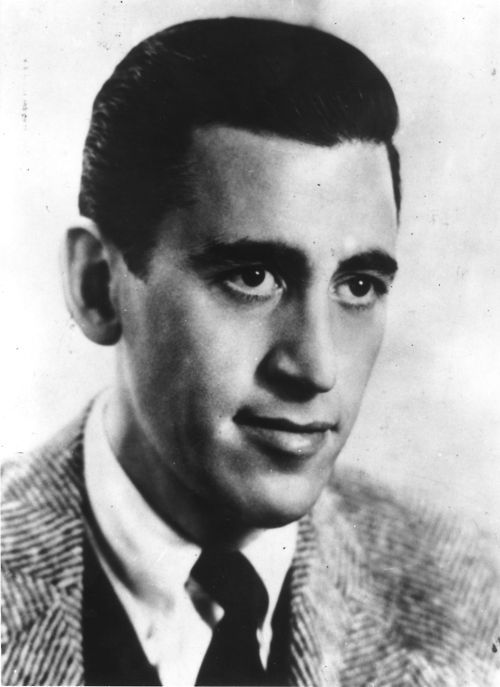
J.D. SalingerJ.D. Salinger died today at 91, and like so many writers and bloggers and journalists reflecting on his writing, life and eccentricities, I am stumbling.

He was a gifted and esoteric writer. He was an inspiration. He was a mystery clinging to privacy. It seems that this latter characterization has intrigued the public almost as much as his craftsmanship. I you count yourself among this lot, you might enjoy a wander over to Kenneth Slawenski’s post “J.D. Salinger’s Untold Stories: Tales Of A Recluse“. If you’re experiencing Salinger’s passing as a sort of memento mori you might be find company in Ron Rosenbaum’s June 1997 article for Esquire, The Man in the Glass House.

The silence surrounding this place is not just any silence. It is the work of a lifetime. It is the work of renunciation and determination and expensive litigation. It is a silence of self-exile, cunning, and contemplation. In its own powerful, invisible way, the silence is in itself an eloquent work of art. It is the Great Wall of Silence J.D. Salinger has built around himself. (Ron Rosenbaum, Longform)

Like his infamous antihero who briefly yearned to wander west pretending to be mute (or deaf? I don’t remember which) Salinger horded silence. Words are written, not explained. Perhaps they can’t or shouldn’t be explained. Perhaps this is Salinger’s legacy, the reminder that words like graffiti on a cave wall are at best an imperfect roadmap for fleeting truths. No, that’s not it. That’s a haul of bollocks! Let’s try again…

Words are enough. Too much, even. They are the best we can do, and asking them to morph into reality — either through the magic of cinema or the exegesis of the author — is self indulgent voodoo. Looks like I’m off the rails again.

Salinger’s Holden Caulfield is at once an archetypal storyteller and audience, a warrior against hypocrisy and a guardian of childhood innocence. He embodies the inevitable contradictions of adolescence and of the writing life. I suspect this literary anchor has inspired and encourage a great many storytellers.

Jonathan Safran Foer has stated that, ‘many readers were created by The Catcher in the Rye, and many writers, too. He and his characters embodied a kind of American resistance that has been sorely missed these last few years, and will now be missed even more.’ (The Penguin Blog)

Where from there? I’m tossing darts in the dark and missing the bulls eye. Missing the dartboard altogether. No doubt Salinger would have been mortified with the swell of memorials.

  • “Who wants flowers when you’re dead? Nobody.” ~ J.D. Salinger
  • “I’m sick of not having the courage to be an absolute nobody.” ~ J.D. Salinger
  • “I am a kind of paranoid in reverse. I suspect people of plotting to make me happy.” ~ J.D. Salinger
  • “An artist’s only concern is to shoot for some kind of perfection, and on his own terms and not any one else’s.” ~ J.D. Salinger

That last quotation is a suitable closing note. As wouuld be any of the thirteen short stories that Salinger published in The New Yorker between 1946 and 1965 including “A Perfect Day for Bananafish” and “Raise High the Roof Beam, Carpenters“. (Available online to subscribers.) Or better yet? Read or re-read The Catcher in the Rye.

N.B. With so many pretensions Latin-isms (In memoriam, Memento mori) cluttering a single, brief blog post, I’d better lather on one more, Nota bene: I pinched this photograph of J.D. Salinger from Soup, but it appears to be a stock photo since it appears all over the place. (In other words, the credit unknown. Apologies.)


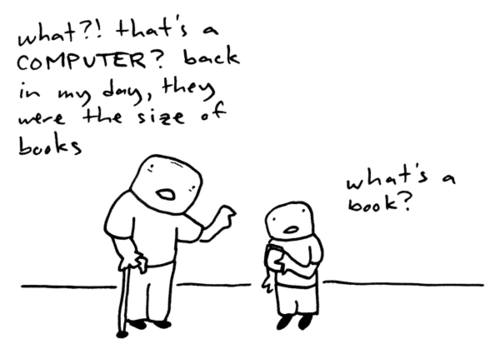
What’s a Book?

What’s a book? Is this timely, or what?

(Cartoon via kratlee.tumblr.com)

Publishing, Embrace the Change

“What I really love is that after working for (gulp) over twenty years in publishing, the game is still changing. Though no one really knows what the new business model(s) will look like, or how they’ll generate revenue, I am optimistic (or foolish) enough to think that these challenging times will give way to an exciting new landscape when all the details shake out. And I am honored to bear witness to this rebirth.”

via Lydia Dishman’s blog

The game is changing for sure, and it’s damned exciting! I feel like book publishing and storytelling in its purest form are re-converging. Storytelling in the digital age will grow more and more engaging, more and more compelling. I share Lydia Dishman’s optimism; only a lack of imagination can inhibit the exciting new means of sharing stories.

Publisher in Talks with Apple over IPad

“Brian Murray, the chief executive of HarperCollins, said in December that e-books enhanced with video, author interviews and social-networking applications could command higher retail prices for publishers than current e-books.” (Wall Street Journal)

I’m keeping my eyes on @harperstudio and vook among others…

How the Brain Works

The Brain as Explained by John Cleese

Wonder. Full of… Thanks to @BoingBoing for making the other parts of my day so much better, so much easier to understand. TGIF! Er, Wednesday?